
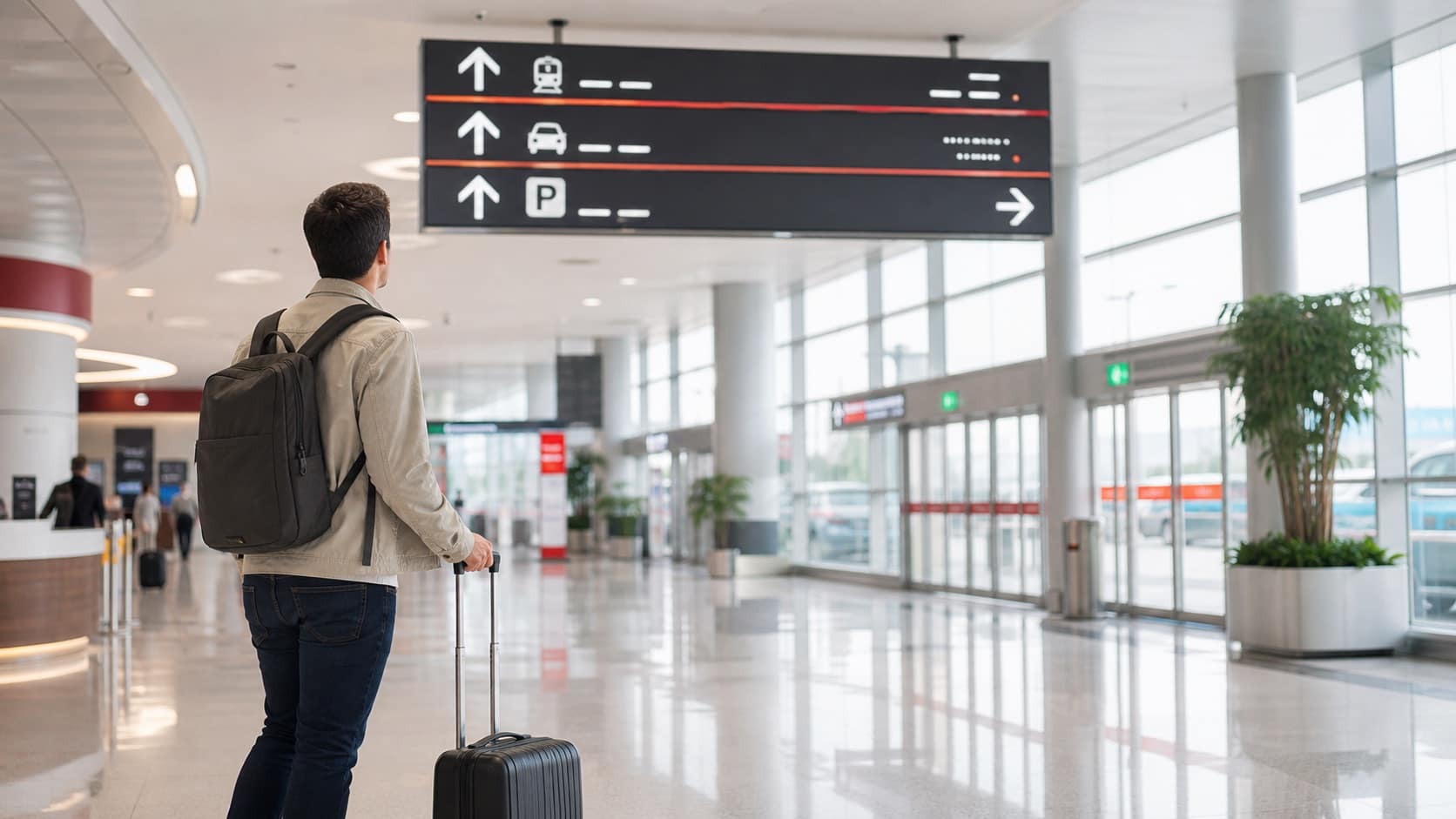

Landing in China is easier when you treat the airport as a sequence of decisions rather than one long queue. The usual path is entry formalities, baggage collection, customs, connectivity, payment and then ground transport. A delay or wrong turn at any one stage can affect a hotel check-in, railway connection or first meeting.
This guide gives international visitors a practical airport-to-hotel workflow. It does not replace the instructions of immigration, customs, the airport, an airline or a transport operator. Follow the signs and directions at your actual port of entry.
Information check: National Immigration Administration, China Customs, Chinese Government and Shanghai Municipal Government sources were reviewed on August 21, 2026. Entry requirements, airport layouts, transport services, operating times, payment acceptance and app functions can change. Confirm current details with the relevant authority or operator before travel.
Prepare an airport arrival pack before departure
The most useful arrival information should work without mobile data. Save it as screenshots or a small offline document, and keep the essentials in your cabin bag rather than checked luggage.
- passport and any visa, permit or entry document that applies to the trip;
- flight number, arrival airport, terminal and scheduled landing time;
- hotel name, address and telephone number in Chinese and English;
- booking confirmation and written late-arrival note when relevant;
- the exact destination pin in a map that works in China;
- primary airport transfer and one realistic backup;
- driver, guide or company contact details when a pickup is arranged;
- a working mobile-service plan and offline translation tools;
- primary and backup payment methods;
- onward railway or domestic-flight details if the airport is not the final stop.
Add these items to the broader China trip planning checklist. Do not assume that an email, cloud drive or booking app will remain accessible immediately after landing.
Step 1: complete the arrival card and follow entry instructions
Before joining the appropriate entry queue, check whether the arrival-card process applies to you and whether your information is complete. Keep your accommodation address and flight details available; do not depend on remembering a translated hotel name.
China’s National Immigration Administration introduced an online arrival-card service for foreign visitors in November 2025. Its official fraud warning and arrival-card notice says the service is free and identifies official channels, including the NIA website and government-service channels. It also says travelers who cannot submit information in advance can use devices at ports, while paper arrival cards remain available.
Use only an official channel. Do not pay a website merely because it resembles a government page, and do not submit passport information to an unverified form. An online card is an administrative convenience, not a promise that a traveler meets the separate entry requirements for a particular journey.
Keep these details ready
- travel-document information exactly as shown on the document;
- flight or other arrival-transport details;
- the address of the first accommodation;
- a local or reachable contact when the form requests one;
- the purpose and planned length of the trip as applicable.
At the port, follow the currently displayed lane and officer instructions. Families, transit passengers, residence-permit holders and travelers using special lanes may have different procedures; use the lane that the airport and immigration authority direct you to use.
Step 2: collect baggage before making transport plans
Check the baggage carousel against the flight number, not only the city name. Large airports can handle several arriving flights in nearby areas. Count every checked item before leaving the reclaim hall and inspect luggage for major damage while the airline’s baggage-service channel is still nearby.
If a bag does not arrive, contact the airline or its authorized ground handler before leaving the controlled baggage area. Keep the baggage tag, boarding pass and a clear description of the bag. Record the case number and confirm how updates will be delivered. Avoid promising a hotel, driver or meeting organizer an exact departure time from the airport until baggage is resolved.
When traveling as a group, assign each person responsibility for their own bags and use a final count. A tour leader can coordinate the report, but every traveler should retain their own document and baggage receipts.
Step 3: choose the correct customs channel
After baggage collection, follow the customs signs. China Customs states that travelers must declare carried baggage and articles truthfully. Its Customs Clearance Guide for International Passengers distinguishes the green “Nothing to Declare” channel from the red “Goods to Declare” channel.
The same official guide advises passengers who are unsure about the rules to ask a customs officer or use the red channel. This is especially important when carrying restricted items, commercial samples, substantial cash, plant or animal products, specialized radio equipment or unaccompanied baggage. Do not rely on an old social post for a legal threshold or product restriction.
Keep any endorsed declaration document that customs tells you to retain. Do not open a seal placed on baggage by customs without authorization.
Step 4: establish a reliable connection
Once you enter the public arrivals hall, establish the minimum connection needed to reach the next destination. Do not stand in a busy doorway while reorganizing accounts, luggage and transport.
Your practical options may include international roaming, a travel eSIM or a local physical SIM, depending on the device, home operator, trip length and current availability. The China SIM card and mobile internet guide compares these choices and explains why offline backups still matter.
Before leaving the terminal:
- test that the phone can load a map or message the pickup contact;
- confirm that the device clock has changed to China Standard Time;
- save the driver’s vehicle and meeting-point details if a pickup is arranged;
- take a screenshot of the route and hotel address;
- keep enough battery for the entire transfer, not only the first message.
Use airport Wi-Fi only as a temporary tool when it works for your device and verification method. Do not make the entire arrival plan depend on receiving one SMS after landing.
Step 5: prepare payment before choosing transport
Official Chinese guidance lists bank cards, mobile payment, cash, bank accounts and e-CNY among available payment methods. The Chinese Government’s Guide to Payment Services in China explains these options, but no single method should be assumed to work for every visitor, merchant, airport machine or transport operator.
Set up and test supported mobile wallets before departure when possible, and bring a lawful backup. Keep a physical card and access to renminbi rather than relying on one app, one phone or one overseas card. The China mobile payment guide covers identity checks, card linking, acceptance and backup planning in more detail.
Do not hand an unlocked phone to an unknown person for “setup help.” Use an official service counter or verified app support when assistance is necessary.
Step 6: choose the airport transfer by arrival conditions
The best transfer is not always the fastest option shown on a map. Choose it after considering the actual terminal, local time, luggage, group size, mobility needs, weather, destination and whether the traveler can navigate a transfer independently.
Metro, airport rail or other public transport
Public transport can be predictable and avoids road congestion, but it may involve long walks, stairs, security checks or transfers. Confirm the last service and the entrance you need on the operator’s official channel. “The airport has a metro” does not mean the line runs to the hotel door or at every arrival hour.
Shanghai’s official airport transportation overview, for example, distinguishes buses, metro, maglev and taxis and provides airport-specific details. Treat it as a Shanghai example, not a national timetable. Check the current page for the actual airport and city.
Official taxi queue
A taxi is often practical with luggage or a direct hotel destination. Follow airport signs to the official queue and avoid unsolicited rides offered inside the terminal. Show the complete Chinese address and map pin, not only an English hotel brand. Confirm that the destination is the correct branch before the vehicle departs.
Ride-hailing
Ride-hailing can provide a recorded pickup and destination, but airports may have terminal-specific pickup zones that are not the same as the taxi stand. Confirm the terminal, level, door or parking area shown in the app. Compare the vehicle plate and driver details before boarding. If the phone connection or payment method fails, use the prepared alternative.
Prearranged driver or guide
A verified pickup can reduce uncertainty for families, business groups, late arrivals or complex equipment. Before departure, obtain the meeting point, driver’s name, reachable contact, vehicle details, waiting policy and the process for a delayed flight. Do not depend only on a handwritten name sign, which can be copied or missed in a crowded hall.
Build a late-night arrival plan
For a late flight, verify three separate things: the terminal transfer still operates, the chosen city transfer still operates, and the hotel will hold the room. A scheduled landing time is not the time a traveler reaches the public arrivals hall.
Prepare a primary and backup route. The backup should remain workable after the last public-transport departure and should not require a new app account at midnight. Send the hotel the flight number and realistic expected arrival, and follow the full China hotel booking and check-in guide for document, address and late-arrival preparation.
If a delay moves arrival past midnight, confirm that the room is booked for the correct preceding night. A reservation beginning on the calendar date after landing may leave a gap before normal check-in time.
Connecting from the airport to a railway station
China’s large cities can have several major railway stations. “Beijing station” or “Shanghai station” is not enough: the ticket may name a different station with North, South, East, West or Hongqiao in its official name.
Match the exact station on the ticket, allow for immigration and baggage variability, and include the time needed to enter the railway station and complete security checks. Avoid a tight self-transfer built around the flight’s scheduled landing time. Use the China high-speed rail guide for passport-based bookings, station arrival and boarding steps.
Business arrivals need a handover plan
For a business visitor or delegation, the airport transfer is the first operational handover. The organizer should know who monitors the flight, who meets the travelers, where the group assembles, how luggage is counted and who communicates a delay to the hotel or first meeting.
- Share the travelers’ names only through an appropriate, verified channel.
- Keep a bilingual destination list for the hotel, office, factory or meeting venue.
- Do not schedule an important meeting immediately after a long-haul arrival.
- Separate vehicles and luggage only when the receiving team has a documented count.
- Give each traveler the hotel address and coordinator contact in case the group separates.
The China business trip planning guide covers meetings, documents, payments, connectivity and contingencies. Organizations that need company visits, interpretation and ground coordination can also review CHINA FACE’s business visit services.
Common airport arrival problems
The pickup contact is not visible
Move to the agreed meeting point, check the terminal and arrival exit, and contact the verified number. Do not accept a substitute driver solely because the person knows a passenger name. If contact cannot be established, use the documented backup transfer.
The phone has no service
Use the offline address and route. Try the airport’s official information or telecom counter when available. Do not repeatedly change account settings without recording the original configuration. A public taxi queue or verified counter may be a safer backup than trying to create several new accounts on an unsecured connection.
The payment app or card fails
Confirm the amount and merchant, then switch to the prepared lawful alternative rather than repeating the same transaction many times. Contact the issuer or wallet through its official support channel if the account appears restricted.
The flight arrives at a different terminal
Tell the driver or organizer the actual terminal shown by the airport, then follow official terminal-transfer signs. Do not walk along airport roadways or accept an unverified ride to save time.
The hotel address has several matches
Compare the full Chinese address, telephone number, district and map pin with the confirmation. Call the property through its verified number before traveling to an uncertain branch.
China airport arrival checklist
- Travel documents and applicable entry requirements confirmed
- Official arrival-card channel identified; no fee paid to an imitation site
- Flight, airport and terminal recorded
- Every checked bag counted before leaving reclaim
- Correct customs channel selected; officer asked when uncertain
- Phone connection tested and battery protected
- Primary and backup payment methods accessible
- Hotel name, Chinese address, telephone and map pin saved offline
- Primary transfer and after-hours backup confirmed
- Driver or guide meeting point and verification details saved
- Late hotel arrival confirmed when applicable
- Exact railway station checked for an onward connection
Frequently asked questions
Can foreign visitors complete China’s arrival card online?
The National Immigration Administration says foreign visitors can use official online channels and that the service is free. Port devices and paper arrival cards remain available for travelers who cannot complete it online. Check whether the process applies to your journey and use only an official NIA or government channel.
Should I use the green or red customs channel?
Use the channel that matches what you are carrying under current customs rules. China Customs says travelers with nothing to declare use the green channel, while those with goods to declare use the red channel. If you are unsure, ask a customs officer or use the red channel as the official guide advises.
What is the safest way to leave a Chinese airport?
There is no single best mode for every arrival. Use official airport signs and verified operator channels. Public transport, the official taxi queue, a correctly matched ride-hailing pickup or a prearranged verified driver can each be appropriate depending on time, luggage and destination.
Will mobile payment work immediately after landing?
Not necessarily. Account verification, connectivity, card authorization and merchant acceptance can vary. Configure supported options before travel and keep another lawful payment method available.
How much connection time should I allow before a high-speed train?
No fixed buffer works for every airport, flight, immigration queue, baggage outcome, road condition or station. Build the plan from the scheduled landing through arrival formalities, transfer and railway-station security, then add a meaningful contingency. Avoid a tight self-transfer.
Can a hotel arrange an airport pickup?
Some properties may offer or coordinate transfers, but availability, price, waiting time and vehicle arrangements are commercial terms that must be confirmed directly. Obtain the driver’s contact, meeting point and delay process in writing.
Turn arrival into a controlled first day
A reliable arrival plan protects the rest of the itinerary: official entry information, honest customs handling, offline hotel details, working connectivity, payment redundancy and a verified route out of the terminal. Explore the China destinations guide for the next stage of the journey. If you need a private itinerary that coordinates airport arrival, hotels, railway stations, meetings and daily routes, contact CHINA FACE.