
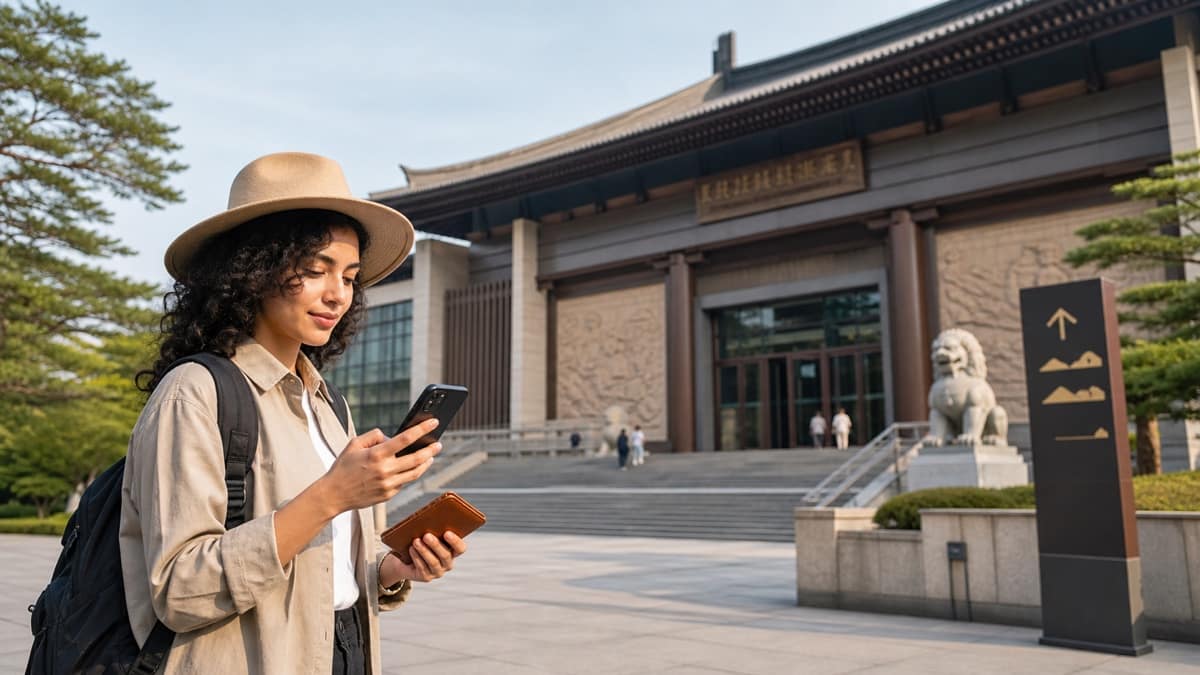

Booking a museum or major attraction in China is not one universal process. One venue may release timed tickets seven days ahead, another may accept passport details through an English website, and a third may allow walk-in entry for its permanent galleries while requiring a reservation for a popular exhibition. The safest plan is to treat every attraction as its own booking system.
This guide gives international visitors a repeatable way to find the official channel, enter a foreign passport correctly, protect the reservation and pass the entry check. It also compares current rules at several high-demand museums so you can see where the differences matter.
Information check: Official venue pages were reviewed on August 27, 2026. Reservation windows, opening days, entrances and exhibition rules can change, especially during public holidays and temporary events. Recheck the venue’s official website or official account before booking and again before travel.
The rule that prevents most booking mistakes
Do not start with a reseller listing or an old screenshot. Start with the attraction’s own website and identify the booking route it currently names. The operator may direct international visitors to an English reservation page, an official WeChat mini program, an official email address or a recognized overseas booking channel. That route can differ from the one used by mainland Chinese ID holders.
Before entering any personal information, confirm four things:
- The domain, account or mini program belongs to the attraction.
- The page covers the exact venue, branch and exhibition you want.
- It accepts the identification document you will carry, usually a passport for foreign visitors.
- The date, time zone and release window are clear.
Names and passport numbers are sensitive information. Only submit them through the official method identified by the venue, and avoid sending passport images unless the official process specifically requires one.
A seven-step attraction booking workflow
1. Confirm the exact attraction and branch
Large institutions may operate more than one building. Shanghai Museum, for example, has a People’s Square venue and Shanghai Museum East, and their schedules and admission arrangements are not identical. Record the official name, street address and entrance before you reserve.
2. Read the current visitor notice
Use the page labeled Tickets, Admission, Visit, Visitor Notice or Reservation. Look for the date on a temporary announcement as well as the standing policy. A holiday notice can override the normal Monday or Tuesday closure, while a special exhibition can introduce a ticket requirement at a venue that usually permits walk-in entry.
3. Identify the release window
“Seven days in advance” is incomplete unless you also know the release time and whether the visit date counts as one of those days. Convert the official release time to your current time zone, then set one reminder for the release and another slightly earlier to log in and check saved traveler details.
4. Enter the passport exactly
Use the same passport you will carry on the visit day. Copy the passport number carefully and keep the name order consistent with the booking form’s instructions. Do not translate, shorten or add a nickname. If the form separates family name and given names, follow those labels rather than guessing from a previous booking system.
5. Check every traveler before payment or submission
Review the attraction, branch, date, time slot, number of visitors, passport numbers and contact method. For a family or group, confirm whether the booking account holder must enter with the other visitors. Save the cancellation deadline before completing the reservation.
6. Save proof in two usable forms
Keep the confirmation email, order number or QR code in the original app and save an offline screenshot for reference. A screenshot does not replace a live code when the venue requires one, so also keep the login method available. Make sure the phone can connect in China using the China SIM card and mobile internet guide.
7. Recheck the day before
Return to the official visitor notice. Confirm opening status, the correct gate, last admission, prohibited items and whether the original passport is required. Check transport time separately and allow for security screening. During peak travel periods, use the China public holiday travel guide to protect the rest of the itinerary.
How current rules differ by venue
The examples below are deliberately kept separate. They show why a single “China museum booking rule” would be misleading.
Palace Museum, Beijing
The Palace Museum’s official international ticket instructions state that admission must be prebooked with valid identification and that the museum does not sell same-day tickets. The current page says tickets open from 20:00 seven days before the visit. Visitors using a passport must bring the original passport used for the booking and check in at the Meridian Gate, the museum’s south gate.
The same official page currently gives international visitors an email reservation route: full name, passport number and intended visit date are sent to the museum’s official ticket reservation address at least one calendar day in advance. It also says the museum has not authorized third-party institutions or individuals as ticket agents for general admission and named galleries. Because this process involves passport data, verify the email address on the live official page rather than copying it from an old post.
Planning consequence: put the Palace Museum on the itinerary before flexible activities. Do not schedule a nonrefundable connection around a ticket that has not been confirmed. Explore the Beijing destination guide for nearby alternatives if the preferred date is unavailable.
National Museum of China, Beijing
The National Museum of China’s current visitor reservation guidelines use a real-name reservation system. The page says visitors may reserve through the official website up to seven days ahead, tickets are released daily at 17:00, and admission is divided into time slots. The original identification used for the reservation and the confirmation message are required at the North Gate visitor entrance during the reserved period.
The museum’s July 2026 temporary-opening notice reinforces two practical points: use official channels and bring valid government-issued identification for verification. It also demonstrates that a museum normally closed on Mondays may occasionally publish a special opening notice.
Planning consequence: do not assume the Palace Museum and National Museum use the same release time, gate or reservation route simply because both are near Tian’anmen Square.
Emperor Qinshihuang’s Mausoleum Site Museum, Xi’an
The official visitor guide says the museum uses real-name advance booking for all visitors, including overseas visitors. It names the official website and official WeChat accounts as reservation channels, and says the website accepts a second-generation Chinese ID card or passport information. Visitors must present the original valid document used for booking at the ticket check.
The site includes both the Terracotta Warriors Museum and the Lishan Garden area. The official guide advises allocating time for both and notes that a shuttle connects them. This affects more than ticketing: a rushed half-day plan can fail even when the reservation itself is correct.
Planning consequence: reserve the museum first, then build the transfer from central Xi’an around the confirmed visit. The Xi’an destination guide can help organize the surrounding route.
Shanghai Museum
Shanghai Museum shows why current branch-level checking matters. Its official English visitor page says individual visitors can book People’s Square tickets through the official WeChat mini program and that overseas visitors can use Trip.com, with original valid identity documents presented at entry. A separate official reservation notice says Shanghai Museum East generally permits individual visitors to enter without a reservation using an original valid ID, while certain spaces and paid special exhibitions can still require advance booking.
The People’s Square venue is also hosting a long-running special exhibition during the current period, with arrangements that differ from ordinary permanent-gallery admission. Before going, check the live People’s Square visitor page and the official reservation notice for the exact branch and exhibition.
Planning consequence: “Shanghai Museum does not require reservations” is too broad. The correct question is whether your chosen branch, date and exhibition require one.
Build a booking calendar for the itinerary
Create one row for every high-demand attraction:
- official attraction and branch;
- official booking URL or account;
- visit date and preferred time slot;
- booking release date and local release time;
- accepted document and required name format;
- payment method, if applicable;
- cancellation deadline;
- entrance gate and original-document requirement;
- backup activity nearby.
Place fixed-ticket attractions before flexible neighborhoods, parks and shopping. Do not reserve two distant attractions with tight time slots on the same day. If the route crosses cities, protect the attraction arrival time with realistic station transfers using the China high-speed rail guide.
Payment and phone preparation
A reservation may be free but still require an account, verified contact method or working mobile connection. Paid tickets may offer different payment methods in the international and domestic interfaces. Prepare at least one backup rather than assuming every foreign card will work in every mini program.
Use the China mobile payment guide to prepare payment options. If a transaction fails, do not repeatedly submit the same booking without checking whether an order was created. Look for an order number, email or charge first; duplicate reservations can consume limited booking allowances.
Keep the confirmation accessible offline, but never store an unprotected passport image in a shared album or public cloud link. A note containing the booking reference and attraction address is usually more useful than multiple screenshots of personal details.
What to carry on the visit day
- the original passport used for the reservation;
- the live confirmation, QR code, email or order number required by the venue;
- a charged phone and compact power bank that follows current transport rules;
- the official entrance name in Chinese and English;
- the venue’s current visitor notice saved for reference;
- only baggage and equipment permitted by the attraction.
Arrive with enough time for security screening, but do not assume early arrival permits entry before the reserved slot. If the reservation is missing or the passport information is wrong, go to the official visitor-service point rather than paying an unofficial helper.
Common booking failures and safer responses
The passport option is not visible
Check whether you entered the domestic booking interface. Return to the attraction’s official international visitor page and follow the route it names. Do not enter a passport number in a field labeled only for a mainland Chinese identity card.
The name does not fit the form
Follow the form’s family-name and given-name labels and keep the spelling consistent with the passport. If the system rejects the valid name, use the venue’s official support channel. Do not invent a shortened identity merely to make the form accept it.
The desired date is sold out
Choose another official date or a genuine alternative attraction. Avoid unofficial sellers who request passport information or promise access that the operator does not recognize. Keep the hotel flexible while major reservations are unresolved; the China hotel booking and check-in guide explains which details to verify.
The confirmation email has not arrived
Check the booking account and order history before submitting again. Review spam and filtered mail, confirm the email spelling and use the official inquiry channel if an order appears incomplete. A payment authorization alone is not always proof of a confirmed ticket.
The venue changes its schedule
Follow the operator’s latest notice and its cancellation or refund process. Do not assume another branch will honor the original reservation. Keep one nearby flexible activity and avoid placing the only possible museum date immediately before an international departure.
Frequently asked questions
Can foreign visitors book China attraction tickets with a passport?
Many major attractions explicitly accept passport information, including the examples in this guide. The exact booking interface and entry procedure differ. Confirm that the venue’s current official page lists passports before entering personal information.
Do all museums in China require advance reservations?
No. Requirements vary by museum, branch, date and exhibition. Shanghai Museum East, for example, currently allows general individual entry without a reservation, while specific spaces or exhibitions may still require one. High-demand Beijing museums use advance real-name reservations.
Is a photo of my passport enough at the entrance?
Do not rely on it. The official pages reviewed for the Palace Museum, National Museum of China and Emperor Qinshihuang’s Mausoleum Site Museum require the original valid identification used for booking. Carry the original passport unless the venue explicitly states otherwise.
Should I use a third-party ticket seller?
Use the booking route named by the attraction. A venue may recognize a particular overseas channel, while another may warn that it has not authorized agents. Verify the named channel on the official operator page at the time of booking.
How early should I plan attraction tickets?
List fixed-ticket attractions as soon as the itinerary is drafted, then record each official release window. Do not assume every venue opens sales on the same day or at the same time.
Make the reservation part of the route
A ticket is not a separate task from trip planning. Its release time, entrance, original-document rule and cancellation deadline affect hotels, trains and the order of each day. Build the itinerary around the confirmed constraints and keep flexible activities around them.
For a multi-city route, browse the China destinations hub. If you want help coordinating official attraction bookings with transport and hotels, send CHINA FACE your dates, cities and must-see places. Availability and venue admission remain subject to the attraction’s official system and current rules.